MN · WI · MI · IA · IL · IN · OH · MO · ND · SD · NE · 27 stories · RSS for this region
·
advisoryChronic wasting disease, baiting and feeding banPepin Co., WisconsinFirst CWD-positive wild deer in the county; baiting and feeding ban extended three more yearschecked Nov 21
The Wisconsin Department of Natural Resources has confirmed chronic wasting disease in a wild deer from Pepin County for the first time, it said this week, and the county's ban on baiting and feeding deer is extended for three more years. The finding comes as the state's nine-day gun deer season opens today, Nov. 21, and runs through Nov. 29. The DNR's release and deer hunting pages have the details.
The Minnesota Department of Natural Resources is offering free entrance to Minnesota state parks and state recreation areas on Friday, Nov. 27, the day after Thanksgiving.
Bowmar Bowhunting offers a quick fix for bucks that stop visiting scrapes, and onX Hunt's Gameday series pairs early-ice walleye fishing with a Minnesota pheasant hunt. The onX Hunt video's description includes sponsor or affiliate links.
Videos play from the creator's own YouTube channel. Outdoor Unc does not take payment to feature a video.
Testing for chronic wasting disease is free, deer must be registered by 5 p.m. the next day, and Illinois's first firearm segment starts Friday.
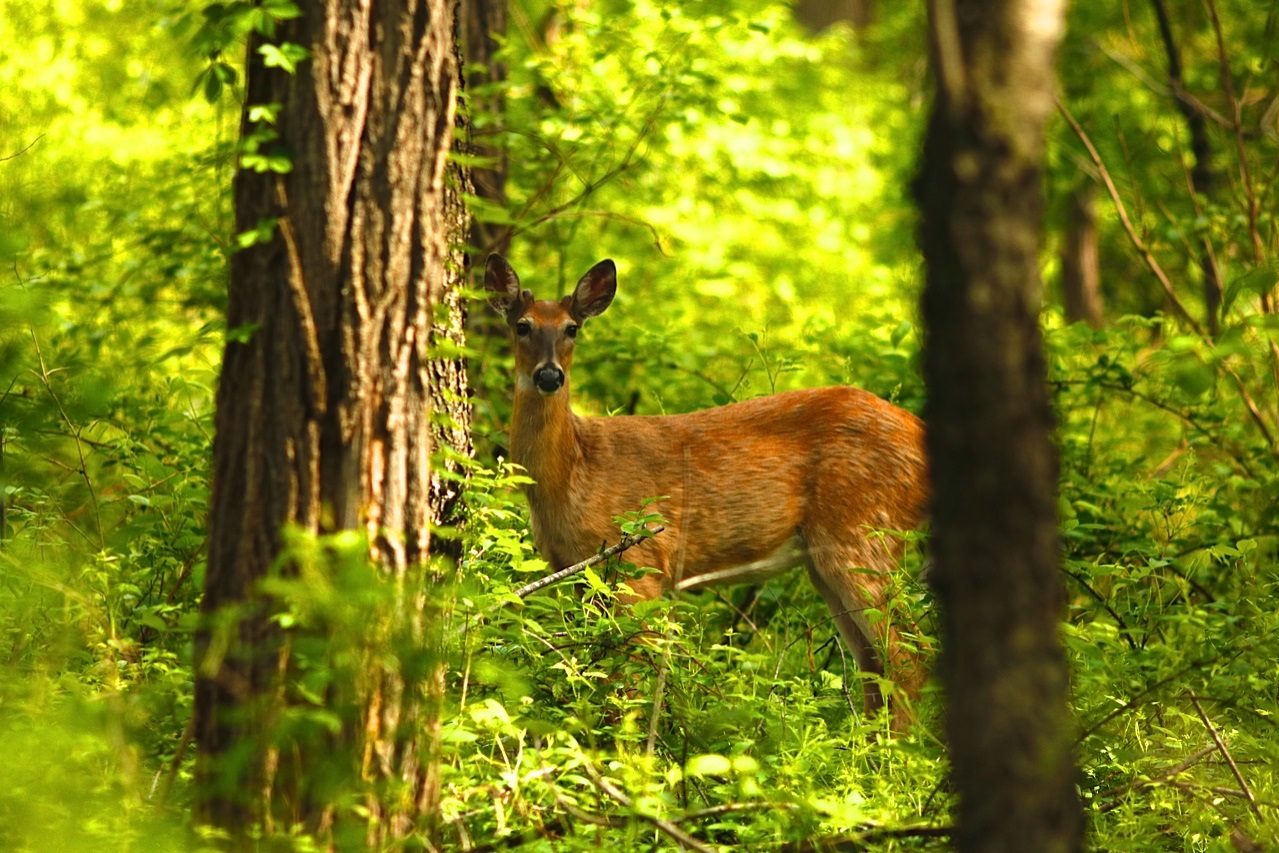
File photo: a white-tailed deer at Trempealeau National Wildlife Refuge in western Wisconsin, September 2016. Photo: U.S. Fish and Wildlife Service, public domain, via Wikimedia Commons
Wisconsin's nine-day gun deer season runs from Saturday, Nov. 21, through Sunday, Nov. 29, the Department of Natural Resources says. Deer program specialist Steve Burns told WSAW that deer numbers should look much like 2025 and that early-season registrations were close to the five-year average. "Wisconsin hunters have a lot to be excited about," he said.
Every deer has to be registered electronically by 5 p.m. the day after it is recovered, through the Go Wild app or website, GameReg, by phone at 844-426-3734 or in person. Hunters need blaze orange or fluorescent pink on at least half of their outer clothing above the waist and at least half of any head covering.
Missouri hunters checked 94,733 deer on the Nov. 14–15 opening weekend of the firearms season, 15 percent above the five-year average and up from 69,893 last year, according to preliminary Missouri Department of Conservation figures reported by KY3. Bucks made up 56,809 of the total. The department's Jason Isabelle credited colder weather. The November portion runs through Nov. 24; deer shot opening weekend in designated counties had to go to a mandatory CWD sampling station. Late youth hunting follows Nov. 27–29, and late antlerless Dec. 5–13 in select counties.
openEast Potomac Park south of Buckeye Drive, including Hains Point, Ohio Drive and the golf course groundsWashington, D.C.Temporary restraining order keeps it open through Nov 28 unless the court rules sooner; limited closures allowed for seawall repairs and safety; golf operations unclearchecked Nov 17
U.S. District Judge Ana C. Reyes on Nov. 14 issued a temporary restraining order blocking the National Park Service's planned Nov. 15 closure of East Potomac Park south of Buckeye Drive, WJLA reported. Hains Point, Ohio Drive, the waterfront paths and fishing areas must stay accessible through Nov. 28 unless the court rules again first; limited closures are allowed for active seawall repairs and imminent safety threats. Whether regular golf continues at the East Potomac course was left to the government and remained unclear.
closed25 state park properties, for deer management huntsStatewide, IndianaClosed from 8 p.m. ET Sun., Nov. 15; reopen Wed., Nov. 18 (8 a.m. ET at Brown County). Closed again Nov. 29 evening to Dec. 2 for a second huntchecked Nov 16
Brown County, Turkey Run, Indiana Dunes and 22 other properties are shut to everyone but drawn hunters until Wednesday morning. A second round follows Nov. 30 and Dec. 1.
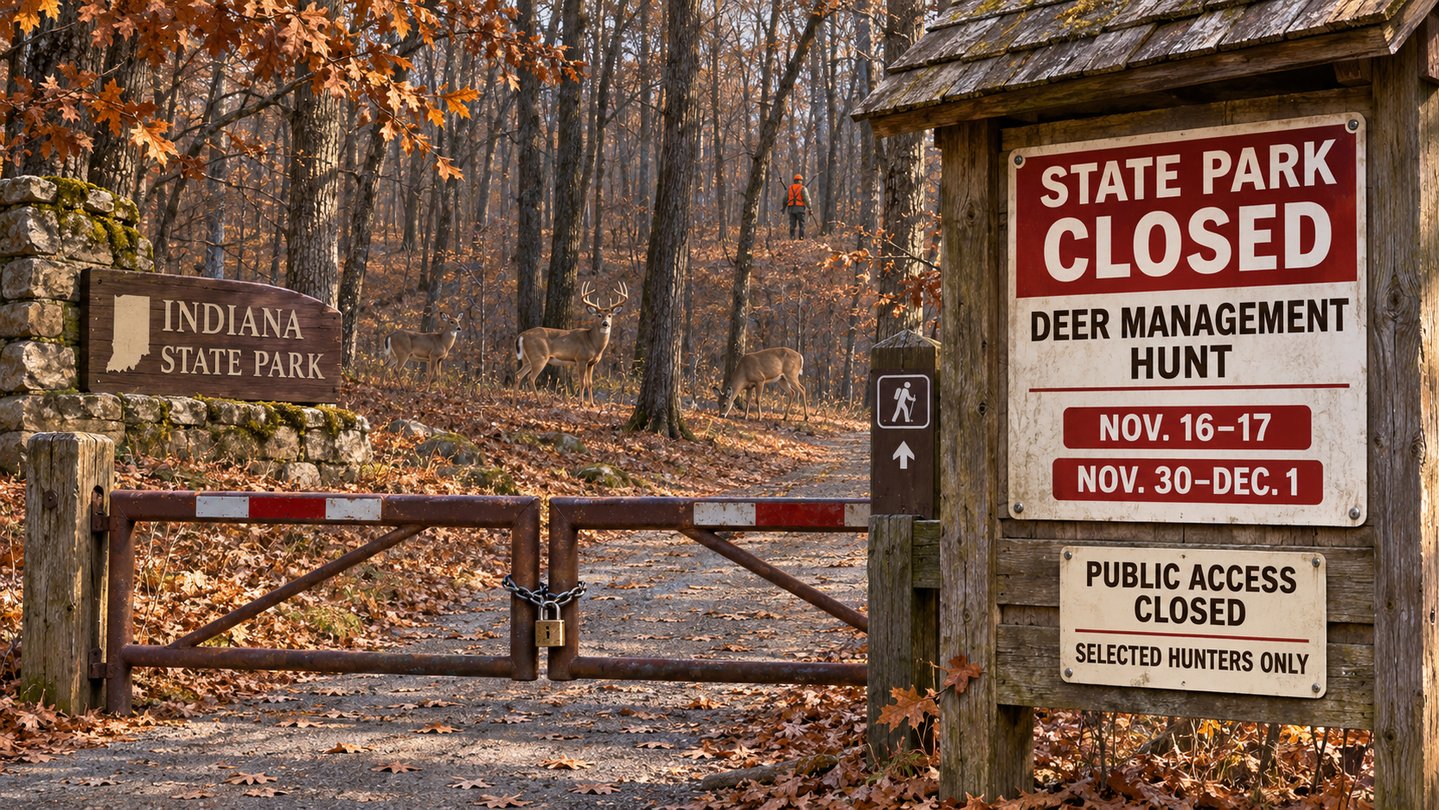
AI-generated editorial illustration of an Indiana state park closed for a deer hunt. Illustration
Twenty-five Indiana state park properties are closed to the public on Monday and Tuesday, Nov. 16 and 17, for the Department of Natural Resources' yearly deer management hunts. Only hunters chosen in the state's advance online drawing are allowed in. Walk-in hunters are not.
The properties are Brown County, Chain O'Lakes, Charlestown, Clifty Falls, Fort Harrison, Harmonie, Indiana Dunes, Lincoln, McCormick's Creek, O'Bannon Woods, Ouabache, Pokagon, Potato Creek, Prophetstown, Shades, Shakamak, Spring Mill, Summit Lake, Tippecanoe River, Turkey Run, Versailles and Whitewater Memorial state parks; Raccoon State Recreation Area (Cecil M. Harden Lake) and Trine State Recreation Area; and Cave River Valley Natural Area. Clifty Falls, Fort Harrison and Trine hold archery-only hunts.
advisoryEast Potomac Park, Hains Point, Ohio Drive and the East Potomac golf courseWashington, D.C.NPS plans to close the area south of Buckeye Drive Sunday, Nov 15, for about 15 months; court hearing on a bid to block it Friday, Nov 13checked Nov 12
The Park Service cites a crumbling seawall; a preservation group and two golfers call that a pretext for a planned championship golf course and are asking a judge Friday to stop it.
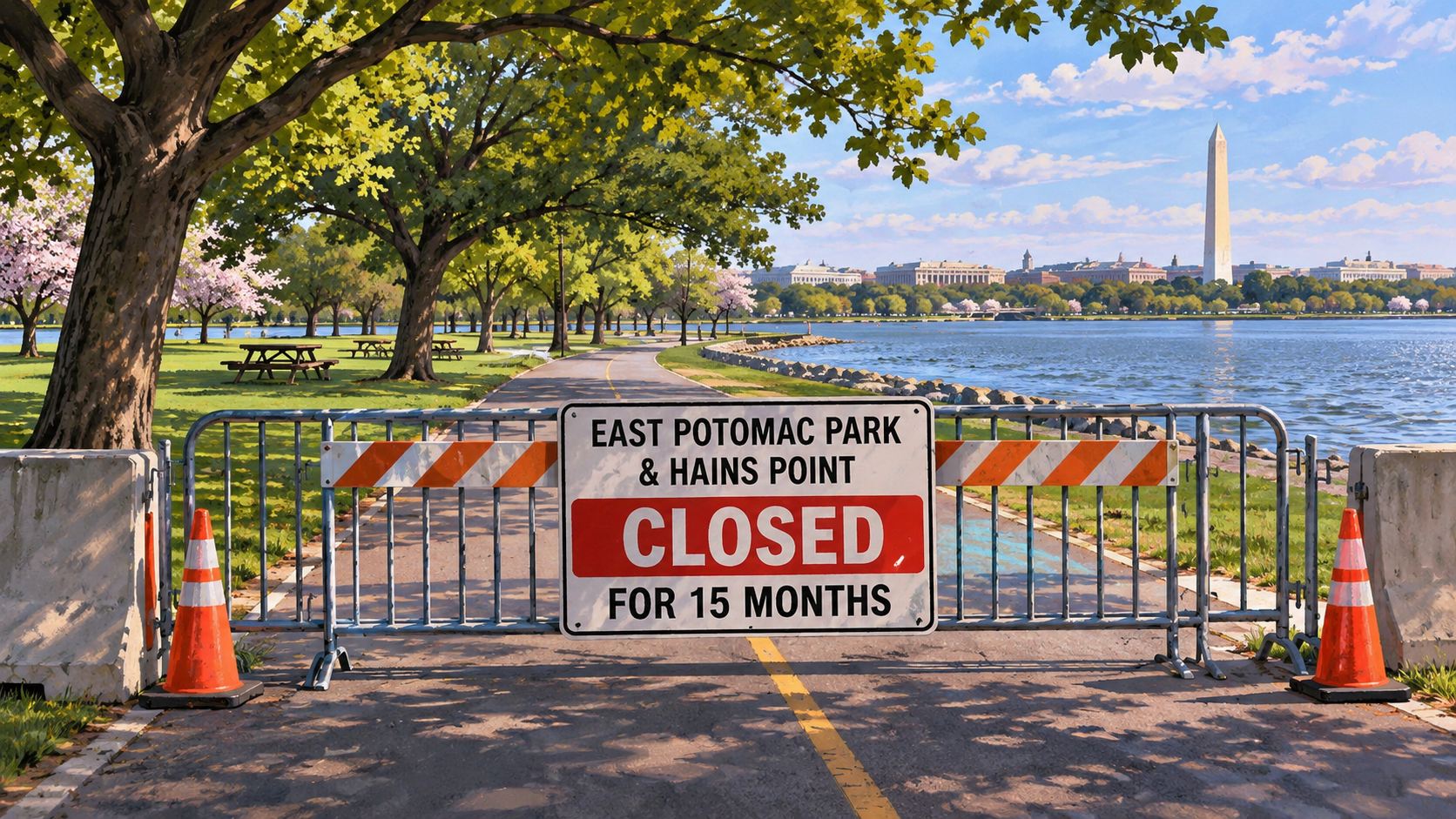
AI-generated editorial illustration of the East Potomac Park closure. Illustration
The National Park Service plans to close East Potomac Park south of Buckeye Drive, including Hains Point, Ohio Drive and the public golf course, on Sunday, November 15, WUSA9 and FOX 5 DC report. The government has said the closure would last about 15 months.
The Park Service says the park's seawall has "significant safety hazards" and is "currently crumbling into the Potomac River," leaving parts of the perimeter flooded, and that the closure would happen regardless of plans for the golf course. President Trump wrote on October 26, "We are closing the East Potomac Golf Course Site as scheduled on November 15th in order to renovate and rebuild," according to court filings described by WUSA9.
noticeDeer baiting and feeding banTaylor and Chippewa Co., WisconsinTaylor County: three-year ban from Dec 1, 2026; Chippewa County ban renewed two years from Dec 1, 2026; Clark County's existing ban unchangedchecked Nov 11
A farm-raised deer on a deer farm in Taylor County, Wisconsin, has tested positive for chronic wasting disease, the Wisconsin Department of Natural Resources said Wednesday. The state agriculture department notified the DNR of the result, which is within 10 miles of both Chippewa and Clark counties.
State law requires a three-year ban on baiting and feeding deer in a county where CWD is detected, and a two-year ban in neighboring counties within 10 miles of the detection. Taylor County's three-year ban begins December 1, 2026, and Chippewa County's existing ban is renewed for two more years from that date.
advisoryCWD containment area: mandatory sampling, no whole carcasses outLivingston Co., New YorkConesus, Groveland, North Dansville, Sparta, Springwater and West Sparta; sampling stations open Nov 12checked Nov 10
A doe taken in Livingston County tested positive, putting six towns under carcass and sampling rules; Vermont is reminding its hunters what they can bring home.
Chronic wasting disease has been found in a wild white-tailed deer in New York for the first time since 2005, the state Department of Environmental Conservation announced on November 6. The deer, an adult doe harvested in the Town of Sparta in Livingston County, was tested through DEC's annual statewide surveillance program. The New York State Veterinary Diagnostic Laboratory at Cornell University tested and retested the tissue, and confirmation testing at the USDA's national lab in Ames, Iowa, is under way.
DEC has set a containment area covering the towns of Conesus, Groveland, North Dansville, Sparta, Springwater and West Sparta. Hunters who take a deer there must submit a tissue sample, may not carry a whole deer out of the area, and need a DEC transport permit to take one to a processor or taxidermist outside it. Collection stations in the area open for on-site sampling on November 12; DEC says locations and hours will be posted on its website. Hunters who kill a deer before then should save the head and contact DEC.
Ahead of Michigan's November 15 firearm deer opener, the state health and natural resources departments reminded hunters on November 9 not to eat venison from deer taken within three miles of Clark's Marsh in Oscoda Township, Iosco County. The Do Not Eat deer advisory, first issued in 2018 and narrowed from five miles to three in 2021, stems from PFAS, including PFOS, found in the livers and muscle of deer near the marsh. Separate Do Not Eat advisories cover all fish and all aquatic and semi-aquatic wildlife from the marsh, including muskrats, frogs, turtles and crayfish. The state also recommends against eating the organs of any fish, deer or wild game statewide.
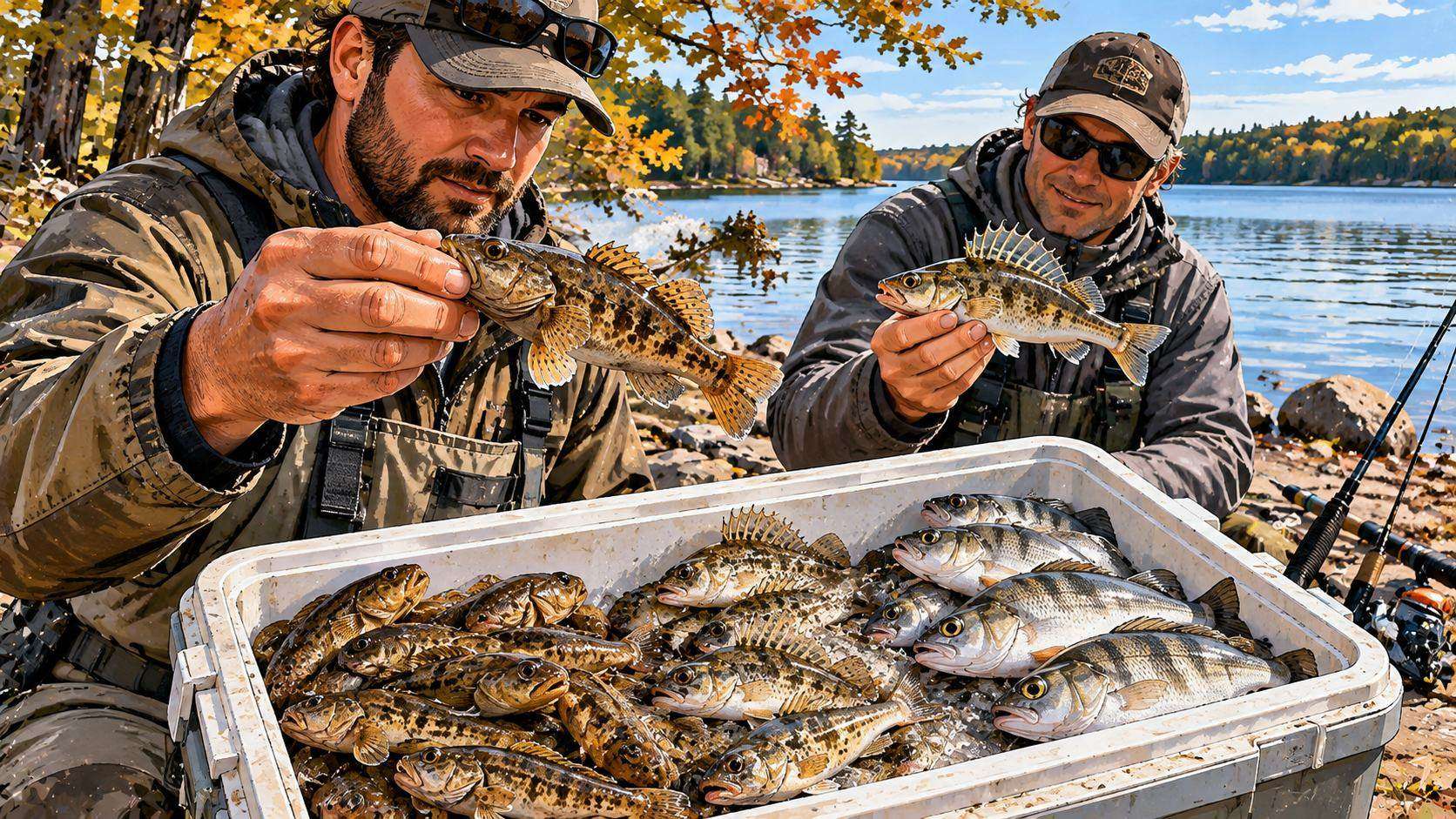
A new permanent Wisconsin rule, effective November 1, lets anglers keep round gobies and ruffe from any state water, and white perch, without limit, the Department of Natural Resources says. Gobies and ruffe must be gutted, beheaded or have their gills removed right away, as must white perch taken from inland waters. The DNR still asks anglers to report any goby caught in the Winnebago System, where no population has been established, and to report other detrimental species from inland waters to the local fisheries biologist.
closedBanning State Park: trails, parking, campground and Kettle River accessPine Co., MinnesotaClosed from Nov 9; day use planned to reopen Oct 2027, campground May 2028checked Nov 9
Most of Banning State Park in Sandstone, Minnesota, closed to the public on Monday, November 9, as construction began, the Minnesota Department of Natural Resources says. The closure covers most recreation in the park, including all parking areas, hiking trails and the public water access on the Kettle River inside the park. The campground already closed on September 8.
Two areas stay open: the designated snowmobile trail along the park's north and west sides, with no trail parking inside the park, and the Eldon climbing area, reached from parking at the south end of the park in Sandstone. Paddlers can use nearby accesses, including one at the north end of the park at Highway 23 and the landing at Robinson Quarry Park just south of the park.
Slap's BBQ in Kansas City, Kansas, was voted the best Kansas City-style barbecue spot in the country in the USA Today 10Best Readers' Choice poll, KCTV5 reported on November 6. Rosedale Bar-B-Q, also in Kansas City, Kansas, was second and Q39 in Kansas City, Missouri, third.
The rest of the top 10, in order: Joe's Kansas City Bar-B-Que, Wolfpack BBQ & Burgers, Arthur Bryant's Barbeque, Jack Stack BBQ, Stateline Road Smokehouse in Napa, California, Gates Bar-B-Q and Woodyard Bar-B-Que. Four of the 10 are in Kansas, five in Missouri.
The winter walleye limit on Upper Red Lake will be four fish in possession, with only one longer than 17 inches, for the fourth winter in a row, the Minnesota DNR said November 9; the open-water season allowed five. "Our fall assessment indicated that the walleye population continues to be in excellent shape. We are dropping the bag limit to four because winter angling on Red Lake is so popular," said Shannon Fisher, the DNR's fisheries section manager. The fall gill-net catch on state waters averaged 35.2 walleye per net, more than half between 13 and 16 inches.
The Wisconsin DNR certified a 9-pound, 11.5-ounce smallmouth bass caught by Austin Schiefer in Green Bay as the state record on November 3, Field & Stream reports. The fish, taken on a 5-inch soft jerkbait and weighed at 9.72 pounds on a certified grocery-store scale, beat the record Leon Stefonek set in 1950 by more than 10 ounces.
openMinnesota firearms deer seasonMinnesotaSeason A: Nov 7–15 in 200 and 300 series areas, Nov 7–22 in 100 series; Season B Nov 21–29 in 300 series; muzzleloader Nov 28–Dec 13; mandatory CWD testing in the southwest on opening weekendchecked Nov 12
The firearms season opened Saturday and runs through November 15 or 22 depending on the permit area, with a late season in 300-series areas through November 29; licenses and harvest registration are now in a new electronic system.
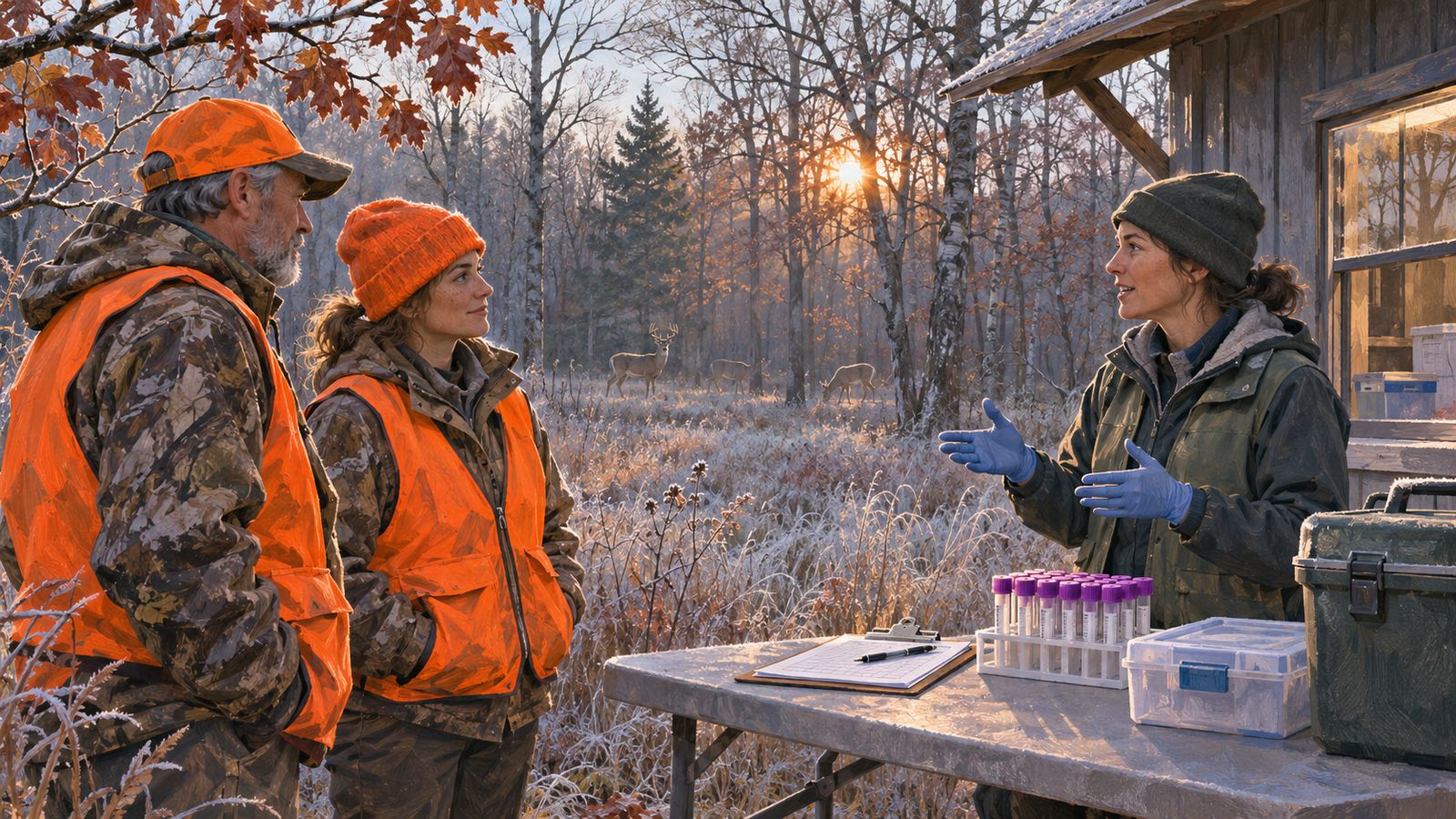
An illustration of CWD sampling at a deer check station. Not a photo of an actual station. Illustration
Minnesota's firearms deer season opened Saturday, November 7, Northern News Now reports. Under the Department of Natural Resources' season list, the firearms A season runs through November 15 in 200- and 300-series permit areas and through November 22 in 100-series areas, and a B season runs November 21 to 29 in 300-series areas. The Department of Natural Resources has started a four-year rotation for chronic wasting disease surveillance that splits the state into quadrants; this year, testing is mandatory in southwestern Minnesota for deer age 1 or older taken on opening weekend, and voluntary elsewhere. Northeastern Minnesota is not scheduled for mandatory testing until 2028.
Licenses can be bought and harvests registered online, through a mobile app or in person under the state's new electronic license system, and license sales are up this year. Deer numbers are rebounding in the northeast, especially around Duluth and parts of Itasca County, after mild winters. Wear blaze orange or blaze pink, check stands before climbing and tell someone where you are hunting. Michigan's firearms season opens November 15 and Wisconsin's November 21.
Correction, 2026-11-12. This story originally said Minnesota's firearms deer season runs through November 29. Earlier on November 12 we changed that to November 22, which was also incomplete. According to the Minnesota DNR, the firearms A season runs November 7–15 in 200- and 300-series permit areas and November 7–22 in 100-series areas, and the B season runs November 21–29 in 300-series areas only.
Wild River State Park in Chisago County, Minnesota, is closed to the public November 7 through 9 for a special hunt, open only to hunters drawn for permits, the Chisago County Press reports; camping and day use resume Tuesday, November 10. The park is unrelated to the Wild River Fire in New Hampshire.
noticeFirearm deer openers: MN Nov 7, MI Nov 15, WI Nov 21, PA Nov 28Minnesota · Michigan · Wisconsin · PennsylvaniaCheck zones, licenses and blaze orange rules with each statechecked Oct 27
Minnesota goes first, then Michigan on November 15, Wisconsin's nine-day hunt on November 21 and Pennsylvania on November 28. Dates and zones below; confirm the details with each state.
Minnesota's firearms deer season opens Saturday, November 7. In the 100-series permit areas, most of the north, it runs through November 22; in the 200- and 300-series areas the A season runs November 7 to 15, and the 300-series B season November 21 to 29.
Michigan's regular firearm season opens on its traditional date, November 15, and runs through November 30 statewide, in both the Upper and Lower peninsulas.
Wisconsin's ninth elk season since the animals were reintroduced opens Saturday, October 17, the Department of Natural Resources says. Sixteen state hunters were drawn from more than 34,000 resident applicants.
In the Northern Elk Management Zone the quota is eight bulls, with four licenses to state hunters and four to tribal members. In the Central Zone, six bull and six antlerless licenses went to state hunters. New this year, tags are unit-specific, so harvest can be concentrated where elk cause more conflicts with people and kept lower where the department wants the herd to grow.
The Minnesota Department of Natural Resources is taking public comment on a proposal to enroll about 57 miles of existing roads and trails in Becker County in the state's OHV grant-in-aid program. The Woods and Wheels ATV Club proposed the Ice Cracking ATV Trail, with Becker County as the local government sponsor.
No new trail would be built. Enrollment would bring state cost-share money to maintain the existing system, and the route would connect Two Inlets State Forest east toward White Earth State Forest and a wider OHV network. The grant-in-aid program is a partnership between the DNR, a local government and a local club that funds trails for ATVs, off-highway motorcycles and off-road vehicles.
Hunters in southwest Minnesota will have to get every deer a year or older that they take on the firearms deer opener, Saturday and Sunday, November 7 and 8, sampled for chronic wasting disease, the Minnesota DNR says. Mandatory sampling is new to the southwest this year.
It is the first year of a four-year rotation. The DNR has divided the state into four surveillance blocks, about a quarter of the state each: the southwest in 2026, the northwest in 2027, the northeast in 2028 and the southeast in 2029. Until now the department sampled mostly near known cases, and nearly two-thirds of the state has not had targeted surveillance in more than 20 years. Recent detections outside the existing CWD management zones prompted the change.
The Minnesota DNR wants early input, through 4:30 p.m. November 19 on an online questionnaire, on fishing rule proposals. They include matching Wisconsin's bass catch-and-release seasons on the St. Croix River; adding Perch Lake to the St. Louis River boundary-water rules, with a bass catch-and-release season and new walleye size limits; closing Musky Bay on the Mississippi and waters near electric carp barriers; opening several Otter Tail County streams and the water below Locks and Dams 3 and 4; letting the DNR close Grand Marais harbor in fall when brook trout gather there; and aligning Saganaga Lake's walleye length rules with statewide rules.
The Minnesota DNR has decided not to adopt the optional three-duck daily bag limit, it said October 8, keeping the existing six-bird structure. The department's own assessment found the option would not harm duck populations, but many hunters said the six-bird limit supports a culture of species identification, mentorship and tradition, and many were confused and thought they would be forced to a lower limit. States that opted in are part of a five-year evaluation through 2031, after which the U.S. Fish and Wildlife Service will decide whether to offer it to others.
The Wisconsin Department of Natural Resources has released an initial draft of its next Turkey Management Plan and is taking public comment through November 20 through an online comment tool. After that, staff will revise the plan and take it to the Natural Resources Board for final approval.
Open houses run 5:30 to 8 p.m., with a presentation at 6: Monday, October 12, at the DNR Service Center in La Crosse; Tuesday, October 13, at the Lincoln County Service Center in Merrill; and Wednesday, October 14, at the DNR/USDA office in Appleton. A virtual session is Thursday, October 15. Staff will explain what has changed since the last round of public input.
Michigan's Natural Resources Commission enacted changes to two fisheries orders effective September 10. One governs trout and salmon on inland lakes and clarifies possession limits to better match the fish actually present in those waters. The other aligns Michigan with Wisconsin on the catch-and-immediate-release lake sturgeon season on the Menominee River, across Dickinson, Iron and Menominee counties.
The important part for anyone heading out: these changes are not in the printed 2026 regulations. The digital version and the state's hunt-and-fish app carry the current rules; the booklet in your truck does not.
The state relaunched MiHunt, its interactive map of land open to public hunting, in time for the fall seasons. It is the tool for sorting what is actually open from what merely looks green on a road atlas, and a rebuild is worth ten minutes before you drive somewhere on last year's assumptions.