Emergency Preparedness Starts on a Calm Day, Not in the Storm
Field Notes is where we write with a looser hand. This one is about water jugs, canned soup, a small grab-and-go bag, and getting ready for a day you hope never comes.
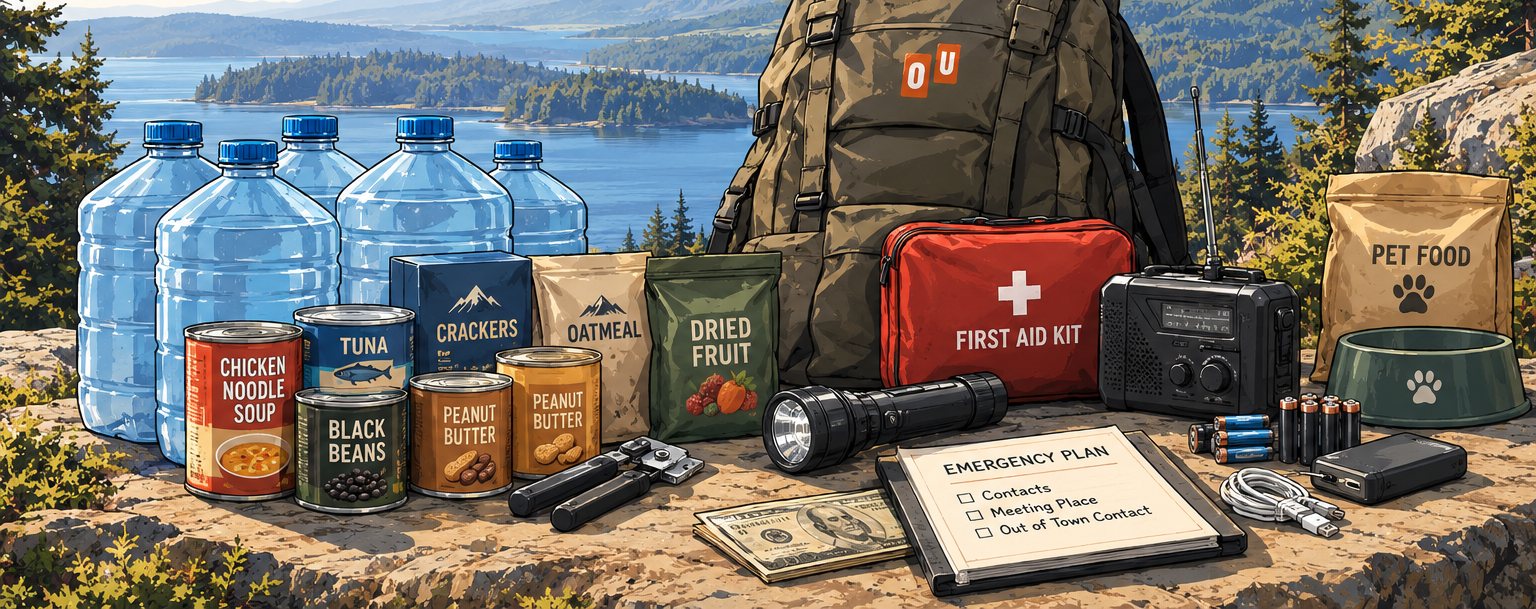
Most of what we call preparedness is just doing a little thinking on a quiet day. When the power is on, the roads are open and the forecast is clear, it is easy to decide what you would want on hand if any of that changed: if the lights went out for three days, the water main broke, a winter storm closed the roads, or a wildfire warning gave you fifteen minutes to leave.
Getting ready is not the same as expecting the worst. We buy insurance for the same reason, not because we want to use it but so it is there if we do. A few jugs of water and a shelf of canned food work the same way. If you spend time outdoors you already think like this: you pack a rain shell under a blue sky and carry more water than the trail sign suggests.
None of it has to be packed into one box. Most households split it two ways. The bulky things, water and food, live where you have room: a pantry shelf, a closet corner or a spot in the garage, away from heat and direct sun. The small essentials go in a grab-and-go bag you can pick up on the way out the door.
Start with water, because you need it first. Ready.gov, the federal government's preparedness site, recommends at least one gallon per person per day, for drinking and basic sanitation, for several days. The Red Cross suggests a three-day supply if you have to leave and two weeks' worth if you stay home. For a family of four, two weeks is 56 gallons, which is a stack of cases in the garage, not a project. Store-bought bottled water keeps until its date; if you fill your own containers, use clean food-grade ones and replace the water every six months.
Then food that needs no refrigeration and little or no cooking: canned soups, beans, tuna and chicken, peanut butter, crackers, oatmeal, dried fruit, shelf-stable milk. The Red Cross plans for the same three days and two weeks as water. Buy what your household already eats and keep it with your regular groceries, so it rotates into dinners before it expires instead of going in the trash. And keep a manual can opener with it. It is the most forgotten item on every list.
The grab-and-go bag holds what you would want if you had to leave in a hurry: a flashlight and spare batteries, a battery or hand-crank radio that receives NOAA weather alerts, a first aid kit, a seven-day supply of any medications, copies of IDs and insurance papers in a waterproof pouch, some cash in small bills, a phone charger and power bank, and a few days of food and water you can carry. Add what your pets need. Ready.gov and the Red Cross both publish full checklists.
You do not have to do it in one weekend or spend much. Add a case of water to this week's grocery run and a few cans the next. Write your household's meeting place and an out-of-town contact on a card and tuck it in the bag. Twice a year, when the clocks change, check the dates and swap anything close to expiring into a meal.
Most of us will go years without needing any of it, and that is the best possible outcome. The supplies are not a prediction. They are a decision you make on a calm day, so that if the lights go out, the people in your house are not starting from zero.
Sources